To Listen To The Full Audio Episode Click Here: The Daily Dose Podcast Audio
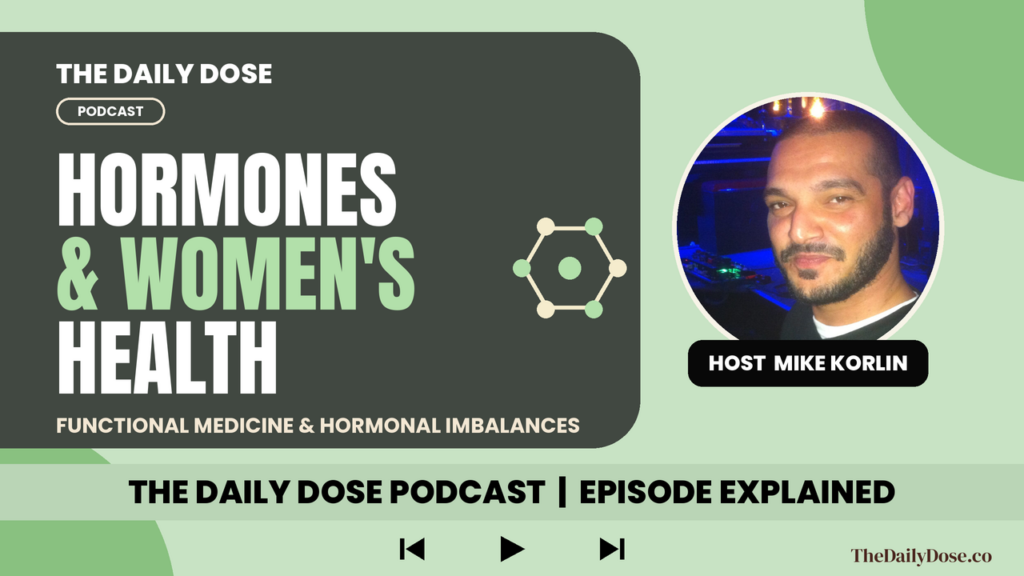
Are you experiencing symptoms that leave you feeling off-balance, irritable, and tired? Hormones are essential chemical messengers in the body that help regulate growth, metabolism, and reproductive functions, and when they get out of balance, it can show up in many ways. In this episode of The Daily Dose Podcast, we explore how functional medicine can help us understand hormonal imbalances in women’s health.
This post is a plain-language summary built from the episode and the write-up we published with it. It is educational and not medical advice.
Key Takeaways
- Hormones are chemical messengers that regulate processes like growth, metabolism, and reproduction.
- Hormonal imbalances can come from a mix of factors, including stress, nutrition, environmental exposures, and conditions such as PCOS, menopause, pregnancy, and thyroid problems.
- Symptoms can vary widely, and they overlap with many other issues, so they are not a reliable way to self-diagnose.
- Functional medicine is described as a patient-centered, holistic approach that tries to identify underlying causes and create personalized plans.
- Diet, movement, stress reduction, and sleep are commonly discussed as foundations of general wellness.
- Because hormone systems are complex, it is important to consult a healthcare professional for evaluation and guidance.
Table of Contents
- What Is Functional Medicine for Hormone Health?
- Common Causes and Symptoms
- How Hormonal Imbalances Are Evaluated
- General Wellness Topics That Come Up
- Why Professional Guidance Matters
- FAQ
- Educational Disclaimer
What Is Functional Medicine for Hormone Health?
Functional medicine is described as a patient-centered, holistic approach to healthcare that aims to identify and address the underlying causes of how a person feels. In this episode, the focus is hormonal balance in women’s health. The approach seeks to identify the root of a concern and create a personalized plan, and it emphasizes that every person is different.
Common Causes and Symptoms
According to the write-up, hormonal imbalances can come from a range of factors, such as stress, poor nutrition, and environmental toxins. They can also be connected to conditions like polycystic ovary syndrome (PCOS), menopause, pregnancy, and thyroid problems. Lifestyle factors such as stress, diet, and physical activity play a significant role.
Symptoms listed in the post include:
- Fatigue
- Weight gain or loss
- Mood swings
- Irregular periods
- Fertility challenges
- Insomnia
- Digestive issues
- Skin problems
- Hair thinning
These symptoms are very common and can have many different causes. Having one or more of them does not mean you have a hormonal imbalance.
How Hormonal Imbalances Are Evaluated
Diagnosing hormonal imbalances can be challenging because symptoms vary widely and can be caused by other underlying conditions. The write-up mentions that practitioners may use a range of diagnostic tools, such as blood, saliva, and urine tests. Which tests make sense, if any, is something to decide with your own healthcare professional.
General Wellness Topics That Come Up
The post goes through several topics that people commonly raise with their practitioners. I am sharing them for education only, not as recommendations.
Diet and lifestyle
A balanced diet with whole foods, regular movement, stress management practices such as meditation or yoga, and enough sleep are commonly discussed as general foundations for well-being.
Supplements and herbs
Vitamins, minerals, and herbs come up often in conversations about hormone health. Quality, safety, and interactions with medications vary, so please speak with a professional before starting anything new.
Hormone therapy
Hormone replacement approaches, including bioidentical hormone therapy, are a topic people discuss with their doctors, particularly around menopause. These are medical decisions that need professional evaluation, and this post does not recommend them.
Why Professional Guidance Matters
The hormone system is complex. If you are experiencing symptoms that worry you, speak with a qualified healthcare professional who can evaluate you, rule out other causes, and help you choose a plan that fits your health history. That is the most important message of this episode.
If you would like to explore more functional medicine conversations, listen to Functional Medicine for Health and Benefits of Functional Medicine.
FAQ
A range of factors can contribute, including stress, nutrition, environmental exposures, and conditions such as PCOS, menopause, pregnancy, and thyroid issues. A healthcare professional can help determine what is going on for you.
Symptoms vary and can include fatigue, weight changes, mood swings, irregular periods, fertility challenges, insomnia, digestive issues, and skin problems. They also overlap with many other conditions.
The write-up notes that hormonal imbalances can affect the reproductive system, including fertility, pregnancy, and the menstrual cycle. If you have concerns, speak with a healthcare provider.
No. This episode is educational. Many people use functional approaches alongside conventional care, and decisions should be made together with a qualified professional.
No. Nothing in this post is a recommendation to take any supplement or hormone. Speak with a qualified healthcare professional first.
Educational Disclaimer
This article is for educational purposes only and summarizes a podcast episode and its write-up. It is not medical advice and is not intended to diagnose, treat, cure, or prevent any disease or condition. Please consult a qualified healthcare professional about symptoms, testing, supplements, or hormone therapy.
Related Articles:
#womenshealth #hormonalimbalances #hormones #functionalmedicine #learnabouthormones #alternativehealing #herbalsupplements #healthandwellness #naturalmedicines #plantmedicines #learnaboutplantmedicines #thedailydose #wickedsources
Meet The Author