To Listen To The Full Audio Episode Click Here: The Daily Dose Podcast Audio
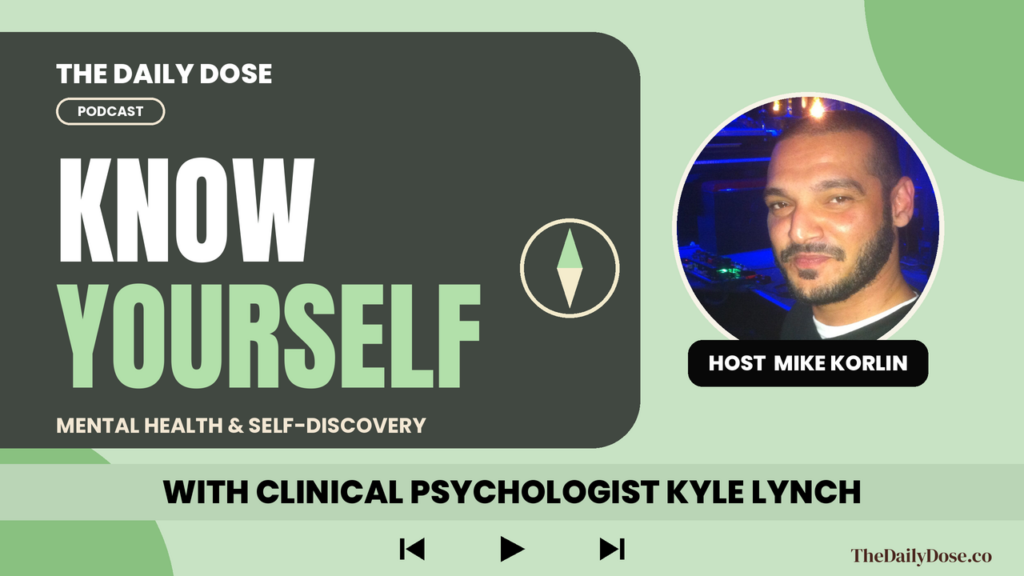
In today’s fast-paced world, it is easy to lose touch with ourselves and our mental wellbeing. The pressure to succeed, constant stimulation from technology, and the demands of daily life can leave us feeling stressed, anxious, and disconnected. In this episode of The Daily Dose Podcast I talk with Kyle Lynch, an active clinical psychologist, about the connection between mental health and self-discovery.
I hope you enjoyed this episode as much as I did. It is educational and not a substitute for professional care.
Key Takeaways
- Kyle Lynch is an active clinical psychologist working in the world of mental health and self-exploration.
- Mental health refers to our emotional, psychological, and social wellbeing, and it affects how we think, feel, and act.
- Self-discovery means exploring our inner selves, values, and purpose, and it is closely connected to mental wellbeing.
- Addressing deep trauma of any kind takes effort, time, and consistency, and it often cannot be resolved in short-term treatment.
- Simple starting points include self-care, mindfulness, self-reflection, connecting with others, and seeking professional help.
- If you are struggling, a mental health professional can provide tools and support.
Table of Contents
- Meet the Guest: Kyle Lynch
- Mental Health in America Today
- What Is Mental Health?
- The Connection Between Mental Health and Self-Exploration
- Five Ways to Start Finding Inner Peace
- Final Thoughts
- FAQ
- Educational Disclaimer
Meet the Guest: Kyle Lynch
Kyle Lynch is an active clinical psychologist. He works in the world of mental health and self-exploration, and he has an audiobook on Audible where you can learn more about his work.
Mental Health in America Today
The original post notes that mental health in America is an evolving landscape. It cites that approximately one in five adults in the United States experience a mental health condition in a given year, with concerns such as anxiety and depression reported more often, especially among younger people. It also points out that despite greater awareness, many people, especially in underserved communities, still face barriers to getting timely and affordable care, and that there is a shortage of mental health professionals in many regions.
On the positive side, there is more effort to reduce stigma, grow mental health education, and use telehealth to make care easier to reach. Numbers change from year to year, so look to reputable sources such as NIMH or Mental Health America for the latest.
What Is Mental Health?
Mental health refers to our emotional, psychological, and social wellbeing. It shapes how we handle stress, how we connect with other people, and how we move through life’s ups and downs. If you or someone you know is dealing with trauma, you are not alone, and millions of people face similar challenges. It takes effort and commitment to work through deep trauma, and it often cannot be resolved with short-term treatment. With time and consistency, though, people can begin to feel better as long as they stay committed to the process.
The Connection Between Mental Health and Self-Exploration
Self-discovery involves exploring our inner selves, our values, and our purpose. By getting to know ourselves on a deeper level, we can build self-awareness, which can help us manage stress, make better decisions, and build more meaningful relationships.
The two are closely intertwined. When we prioritize our mental health and take steps to manage stress and anxiety, we create the space and clarity to explore who we are. And practices like journaling, meditation, or therapy can help build the awareness to look after our mental health more effectively.
Five Ways to Start Finding Inner Peace
Finding inner peace takes commitment. These are the ideas that came up and that I shared in the post:
- Prioritize self-care. Make time each day for activities that bring you joy and relaxation, like a walk in nature, yoga, or a favorite hobby.
- Practice mindfulness. Pay attention to the present moment with curiosity and openness to become more aware of your thoughts, feelings, and physical sensations.
- Engage in self-reflection. Journaling, meditating, or therapy can build self-awareness and insight.
- Connect with others. Make time each day for loved ones, by phone, text, or in person. Social connection supports a sense of belonging and purpose.
- Seek professional help. If you are struggling, do not hesitate to reach out to a mental health professional for tools and support.
If you want to keep exploring mental wellbeing with us, listen to Happiness and Your Full Potential with Dr. Bradford and The Therapy Twins on mental health treatment.
If you are in crisis or thinking about harming yourself, call or text 988 in the U.S. (the Suicide and Crisis Lifeline) or contact local emergency services.
Final Thoughts
Mental health and self-discovery are essential parts of overall wellbeing. Prioritizing them can build self-awareness, help you manage stress and anxiety, and strengthen your relationships. Finding inner peace takes commitment and dedication, and I believe the rewards are worth the effort.
FAQ
Self-discovery involves exploring our inner selves, our values, and our purpose in life. Mental wellbeing is about our emotional, psychological, and social health.
Self-reflection over time can give you insight into what your struggles are, what they mean to you, and how they may have held you back. It can be a first step toward living more fully. It does not replace professional care.
They are closely connected. To improve one over the long term, it often helps to have a deeper understanding of the other.
Kyle Lynch is an active clinical psychologist who joined The Daily Dose Podcast to talk about mental health and self-discovery.
If you are struggling, feel overwhelmed, or are dealing with trauma, a licensed mental health professional can help. In an emergency, contact local emergency services.
Educational Disclaimer
This article is for educational purposes only and summarizes a podcast conversation. It is not medical or mental health advice and is not intended to diagnose, treat, cure, or prevent any condition. Please consult a licensed professional for your own situation.
Related Articles:
- Potential Of Psilocybin Depression Now 2023
- Herbal Supplements For Anxiety And Depression
- Diabetes And Mental Health The Connections
- Magic Mushrooms For Mental Health Explained
Meet The Author