To Listen To The Full Audio Episode Instead Click Here: The Daily Dose Podcast Audio
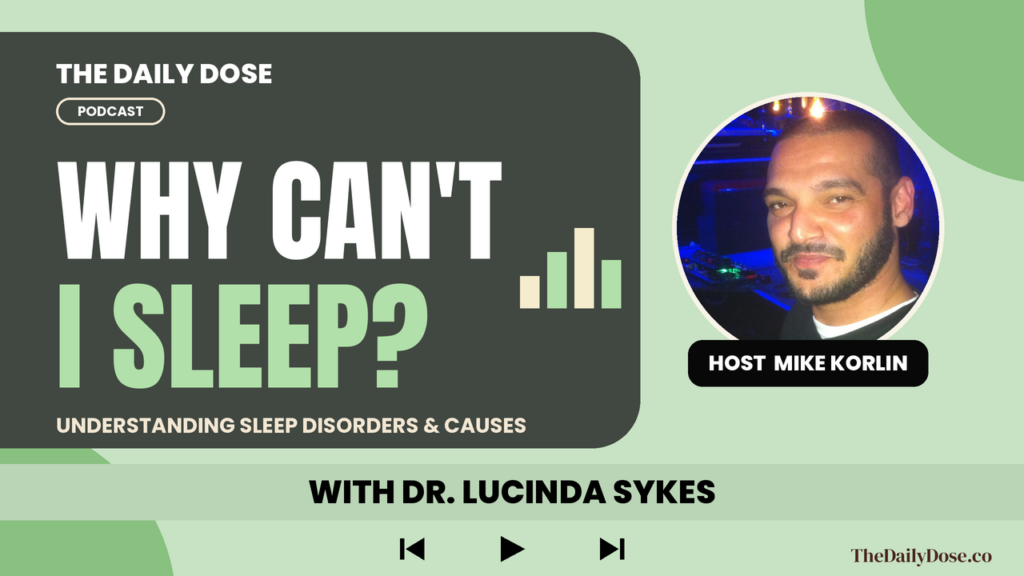
Sleep is essential for our physical and mental well-being, yet many people struggle to get a good night’s rest. In this second conversation with Dr. Lucinda Sykes on The Daily Dose Podcast, we zoom in on sleep disorders: what causes them, the different types, and the general approaches people discuss with their doctors.
According to the original post, an estimated 50 to 70 million adults in the United States have a sleep disorder. Understanding them is a first step toward talking about them with a professional. This episode is educational and not medical advice.
Key Takeaways
- Dr. Lucinda Sykes joins Mike Korlin to talk about sleep disorders, from trouble falling asleep to excessive sleepiness during the day.
- The post describes three broad groups of causes: lifestyle factors, medical conditions, and mental health.
- Common types include insomnia, sleep apnea, restless legs syndrome, narcolepsy, and parasomnias.
- Approaches people commonly discuss with their doctors include lifestyle changes, medical care, cognitive-behavioral therapy (CBT), and alternative practices like meditation.
- Understanding sleep disorders matters for proper diagnosis, and diagnosis is something only a qualified professional can provide.
- If you are having sleep problems, talk to your doctor.
Table of Contents
- Meet the Guest: Dr. Lucinda Sykes
- Why Sleep Disorders Matter
- What Causes Sleep Disorders?
- Common Types of Sleep Disorders
- Approaches People Talk About With Their Doctors
- Final Thoughts
- FAQ
- Educational Disclaimer
Meet the Guest: Dr. Lucinda Sykes
Dr. Lucinda Sykes is a doctor focused on sleep. You can find her and her work at lucindasykesmd.com and meditationforhealth.com. This episode is a companion to our first conversation, Understanding Sleep and Insomnia, which goes deeper into sleep stages and the link with dementia.
Why Sleep Disorders Matter
Sleep disorders can range from trouble falling asleep, to staying asleep, to feeling extremely sleepy during the day. Because sleep touches mood, energy, and brain health, getting clarity on what is going on is valuable. In the original post I also linked out to sources from places like the American Heart Association and the NIH for readers who want to dig in.
What Causes Sleep Disorders?
The post lists three groups of potential causes.
Lifestyle factors
Poor sleep habits, an irregular schedule, night shift work, or too much use of electronic devices before bed can all contribute to sleep problems.
Medical conditions
Conditions such as sleep apnea, restless legs syndrome, narcolepsy, and others can affect how well we sleep.
Mental health
Anxiety, depression, and other mental health conditions can cause sleep disturbances, and sleep problems can in turn affect mental health.
Common Types of Sleep Disorders
- Insomnia: difficulty falling asleep or staying asleep.
- Sleep apnea: a condition where breathing is interrupted during sleep, causing a person to wake repeatedly during the night.
- Restless legs syndrome: a neurological disorder that causes an uncontrollable urge to move the legs, often leading to disrupted sleep.
- Narcolepsy: a neurological disorder that causes excessive daytime sleepiness and sudden bouts of sleep.
- Parasomnias: a group of disorders that include sleepwalking, night terrors, and other unusual behaviors during sleep.
Approaches People Talk About With Their Doctors
The post outlines several approaches. Which one, if any, is right for you is a decision to make with your own healthcare provider.
- Lifestyle changes: a regular sleep schedule, less caffeine and alcohol, and avoiding electronics before bed.
- Medical care: depending on the specific disorder, a doctor may discuss options such as CPAP machines, medications, or surgery.
- Cognitive-behavioral therapy (CBT): can help people identify thoughts or behaviors that contribute to sleep problems.
- Alternative practices: acupuncture, meditation, and other relaxation approaches.
If you are building a calming evening routine, you can browse our Sleep Aid category. Supplements are for adults, are not intended to diagnose, treat, cure, or prevent any condition, and are best discussed with a healthcare professional first. See our Product Warnings & Disclosures for details.
Final Thoughts
Sleep disorders are common, and understanding them is essential for getting the right help. If you are experiencing sleep problems, talk to your doctor to determine the best course for your specific needs. Press play above to hear the whole conversation with Dr. Sykes.
FAQ
The post says some sleep disorders can be cured, while others may require long-term management. A healthcare professional can tell you what applies to your situation.
Symptoms vary, but may include trouble falling or staying asleep, excessive daytime sleepiness, snoring, or gasping during sleep. Only a qualified professional can diagnose a sleep disorder.
General habits include a regular sleep schedule, limiting caffeine and alcohol, and avoiding electronic devices before bed.
Insomnia is trouble falling or staying asleep. Sleep apnea involves repeated interruptions in breathing during sleep. They are different conditions that need different evaluations.
Listen to our first conversation, Understanding Sleep and Insomnia, and visit her websites linked above.
Educational Disclaimer
This article is for educational purposes only and summarizes a podcast conversation. It is not medical advice and is not intended to diagnose, treat, cure, or prevent any disease or sleep disorder. Consult a qualified healthcare professional about any sleep concerns or before using any supplement.
Related Articles:
- Understanding Sleep And Insomnia With Dr. Lucinda Sykes
- How Nootropics Aid Sleep: Your Guide Now
- Sleep Cycles Understanding The Stages
- Treating Insomnia 15 Tips To Aid Sleep
- How Nootropics Aid Sleep: Your Guide Now
- Natural Sleep Supplements To Improve Sleep
Meet The Author