To Listen To The Full Audio Episode Click Here: The Daily Dose Podcast Audio
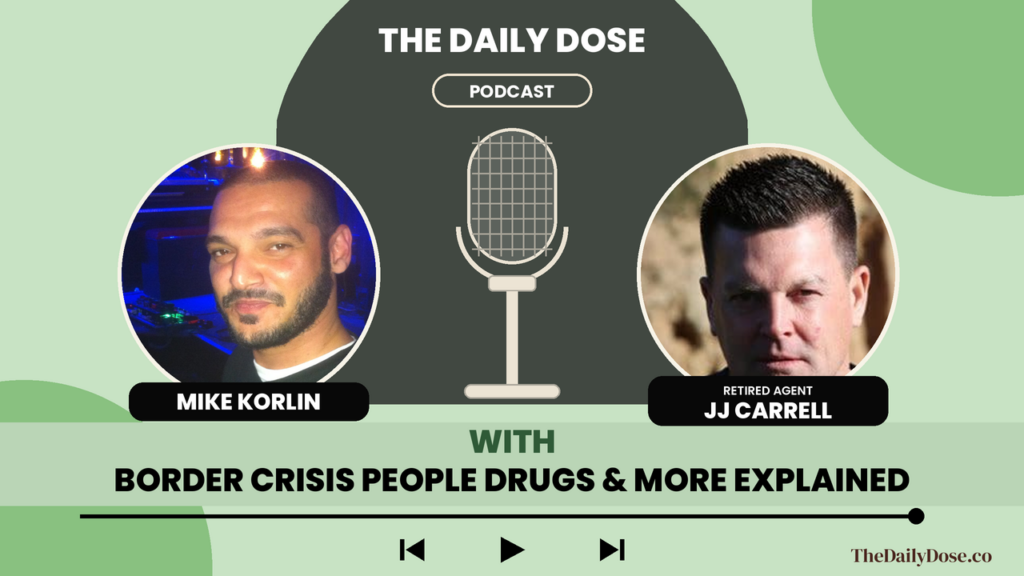
I sat down with JJ Carrell, a retired Border Patrol officer, for this episode of The Daily Dose Podcast, and it turned into one of the most direct conversations I have had on the border crisis. JJ has a front-line view of how border security works, how policy is shaped from above, and what the day-to-day reality looks like for the people who work there. It is not often that someone from that field is willing to talk openly, so I wanted to give the conversation room.
I also come to this topic as an immigrant myself, so I understand why so many people want to come to this country. At the same time, I have a hard time ignoring how stretched the system is. On a wellness and health channel, the reason I cover it is the broader public health picture, including the fentanyl and other narcotics that I believe enter mainly through the border. Everything below is based on that conversation and on the views JJ and I shared in the episode, so treat it as one perspective to weigh alongside other sources.
Key Takeaways
- JJ Carrell is a retired Border Patrol officer who joins Mike Korlin to talk about how border security and border policy actually work.
- The episode looks at the causes of the crisis: shifting immigration policy, economic gaps between countries, and violence and instability in many migrants’ home countries.
- Border communities feel the pressure first, with strain on local resources, public safety concerns, and social and cultural changes.
- The humanitarian side matters too: how migrants are treated, family separations, and basic health and well-being along the journey.
- Security concerns include drug trafficking, human trafficking, and wider national security questions.
- The post’s FAQ covers Title 42 and why border resources matter for policing trafficking.
Table of Contents
- Meet the Guest: JJ Carrell
- Overview of the Current Crisis
- What Is Driving the Crisis
- Impact on Border Communities
- Humanitarian Challenges
- Security Concerns: Drugs, Trafficking and the Border
- Where I Land After This Conversation
- FAQ
- A Note on Perspective
Meet the Guest: JJ Carrell
JJ Carrell is a now-retired Border Patrol officer. In the episode we talk about how the border is secured, how policy decisions made far from the border land on the people carrying them out, and why a professional from that field can see things the news cycle misses. As I said when I published this episode, it is unfortunately rare to hear someone from that world tell it the way they see it, and that is what made the conversation worth recording.
If you listen to the episode or watch the video, you will hear JJ’s take on the numbers, the implications, and the other issues that stem from the border alone.
Overview of the Current Crisis
In recent years the United States has seen a large number of migrants seeking entry through its southern border. In the episode we look at the factors behind that, including changes in immigration policy, economic disparities, and violence and instability in the migrants’ home countries.
Understanding it matters because it touches many parts of society at once: border communities, limited resources, public safety, and humanitarian questions. The more clearly we understand the issue, the easier it is to talk about it honestly.
What Is Driving the Crisis
These are the three drivers we talk through in the episode.
Immigration policy changes
Shifts in enforcement priorities and new regulations can change migration patterns. When policy changes, it creates uncertainty and can change how many people attempt to cross.
Economic factors
Economic gaps between countries, limited job prospects, and poverty can motivate people to look for better opportunities elsewhere.
Violence and instability in source countries
Many migrants come from countries dealing with violence, political instability, and organized crime. Escaping danger and looking for safety for their families is a powerful motivation for taking a risky journey.
Impact on Border Communities
Border towns carry a lot of this weight. We cover three areas:
- Strain on resources: local infrastructure, healthcare systems, schools, and social services can become overwhelmed, which affects both newly arrived migrants and long-time residents.
- Social and cultural implications: new arrivals can bring cultural diversity, along with language barriers and the need for social support, which creates both opportunities and tensions.
- Public safety: law enforcement has to handle complex border security and crime prevention issues, and criminal groups can take advantage of a chaotic situation.
Humanitarian Challenges
None of this is only about numbers. People are involved, and the episode touches on the humanitarian side too:
- Treatment and conditions: providing humane and dignified treatment to people seeking refuge is a basic concern.
- Family separations: when parents and children are separated during the immigration process, it can cause significant emotional strain and make reunification hard.
- Health and well-being: people who make long, harsh journeys can face health challenges, and access to medical care, mental health support, and sanitation becomes a pressing issue.
Security Concerns: Drugs, Trafficking and the Border
This is the part that ties most closely to what I cover on The Daily Dose. In the post I wrote, I put it plainly: fentanyl and other narcotics that are causing so much harm have their main point of entry at the border. In the episode we talk about three security areas:
- Drug trafficking: criminal organizations look for weak points in border security to move drugs across, which feeds the ongoing drug epidemic.
- Human trafficking: vulnerable migrants, including women and children, can fall victim to traffickers who exploit their desperate situation.
- National security: keeping the border secure is also about reducing the risk of people with bad intentions taking advantage of weak controls.
If you want a related look at how mental and emotional health intersect with big social issues, see our episode on the state of mental health treatment with The Therapy Twins.
Where I Land After This Conversation
The border crisis is complex, and it reaches into communities, health systems, public safety, and national security. My goal with this episode was not to hand you an answer, but to hear from someone who worked at the border and let you decide for yourself. Comprehensive immigration reform, addressing root causes, and stronger border security were the themes that came up most as ways to build a more humane, secure, and sustainable approach.
FAQ
JJ Carrell is a retired Border Patrol officer. In this episode he talks with me about border security and how policy decisions are structured from above.
As discussed in the original post in May 2023, Title 42 was a pandemic-era measure that allowed migrants to be kept out when there were signs of illness. At the time this post was published it had recently expired. Since laws and policies change, check current official sources for the latest rules.
I cover it because of the broader public health picture, particularly the fentanyl and other narcotics that I believe enter mainly at the border. The episode looks at that link along with the humanitarian and security sides.
In the episode, our view is that enough resources allow officers to handle the many ways people, weapons, and narcotics are brought in. When officers are overwhelmed by volume, it is harder to police trafficking. This is the perspective discussed in the conversation, not an official statistic.
That is a question I raised in the original post. My view there was that a country puts its own communities’ needs first, and that very open policies can strain the local agencies and municipalities that hold a nation together. There are other views on this, and I encourage you to look at multiple sources.
Use the audio player at the top of this page or the Daily Dose Podcast Audio link just under it.
A Note on Perspective
This post is a summary of an interview and reflects the opinions of the host and the guest, not legal or policy advice. Details such as Title 42 reflect when the episode was recorded in 2023. Please check official government sources for current information.
Related Articles:
- Fentanyl Floods States 2022 Death By Design
- Safe Drug Spaces Program Cannabis News
- Flesh Eating Drug Xylazine Explained Now
- Opioid Abuse Avoid Symptoms With A.I. Drugs
- Opioid Lawsuits & Payout Big Pharma Exposed
Meet The Author