Checkout the full audio episode here The Daily Dose Podcast Audio
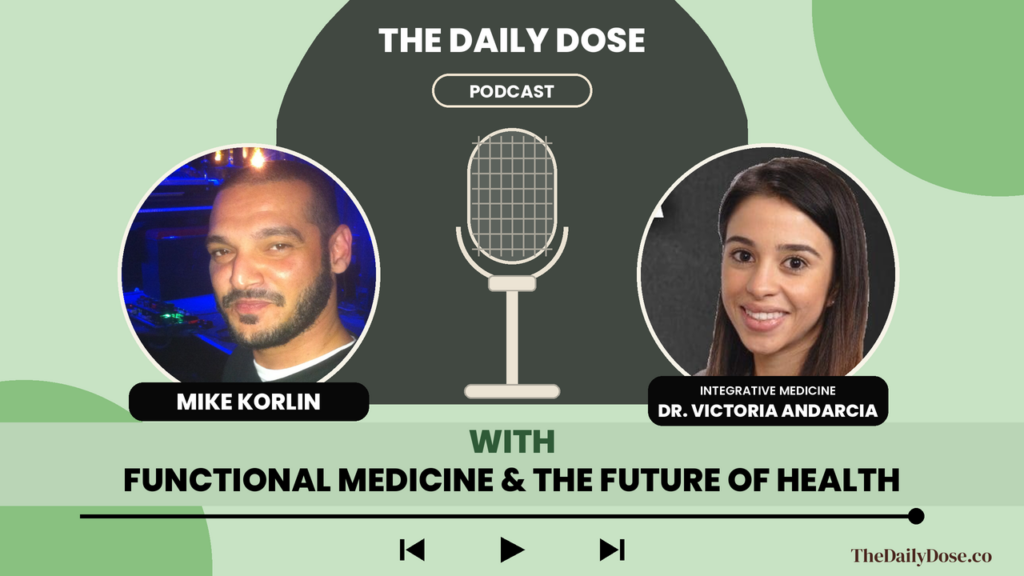
What is functional medicine, and why does it matter? Those are the questions I wanted to answer in this episode of The Daily Dose Podcast with Dr. Victoria Andarcia. If you have ever felt let down by the medical system, or you just want to understand your health more deeply, this conversation is for you.
Dr. Andarcia practices integrative treatment for healing. The approach tries to look at the root causes behind symptoms instead of only managing the symptoms themselves. It can sound far-fetched by modern medical standards, but I’d say don’t be too dismissive and give it a listen. As always, this is an educational conversation and not medical advice.
Key Takeaways
- Dr. Victoria Andarcia practices integrative treatment, which combines practices from alternative medicine with conventional medicine.
- The big idea in the episode is root causes and prevention: looking at how we eat, think, feel, and relate to the world around us.
- In Dr. Andarcia’s words, there is no one-pill solution, and medicine is more than pharmaceuticals.
- She says that long-term exposure to chemicals and its accumulation is something she sees showing up in people’s health.
- Integrative care draws from many practices, such as nutrition, movement, stress management, and specialized testing.
- Never stop or change a prescription on your own. Work with your own healthcare provider on any decision about medication.
Table of Contents
- Meet the Guest: Dr. Victoria Andarcia
- What Is Integrative and Functional Medicine?
- Examples of Integrative Practices
- Thinking About Medications Carefully
- Prevention and Education
- Final Thoughts
- FAQ
- Educational Disclaimer
Meet the Guest: Dr. Victoria Andarcia
Dr. Victoria Andarcia practices integrative medicine. In the original write-up of this episode, she describes her path in her own words: “My healing journey started when I had a meltdown in residency. An engagement ended, I spent a month in Arizona. Dabbled with energy medicine, worked with shamans and came back with an understanding the medicine was more than pharmaceuticals and more about how we interacted with the world around us. My goal is to help people see the same. Medicine is how we eat, think, feel, our relationships and the list continues. There’s no one pill solution.”
What Is Integrative and Functional Medicine?
Integrative treatment is an approach to health that combines practices from alternative medicine with conventional medicine. The goal, as we discuss it, is to look at the underlying factors behind how a person feels instead of focusing only on one symptom at a time.
The way I think about it is simple: prevention and education come first. A lot of us have been conditioned to accept whatever treatment we are given at face value, as long as we feel better in the moment. Looking at the bigger picture of lifestyle, environment, and daily habits is a different way of thinking about health.
Examples of Integrative Practices
The post lists a number of practices that people commonly associate with integrative care. Not all of these will be right for everyone, and some are best done only under the guidance of a licensed professional:
- Acupuncture, massage, and chiropractic or osteopathic care
- Naturopathy and herbal remedies
- Body movement therapies such as tai chi and yoga
- Meditation and stress management techniques
- Specialized testing to explore the root causes of how a person feels
- Nutritional and botanical supplements
- Other approaches that practitioners may offer, which should always be discussed with a qualified professional
If you are curious how supplements fit into a routine, you can browse our Wellness Support category. Always check with a healthcare professional first, especially if you take medications.
Thinking About Medications Carefully
Many of us know someone who is prescribed multiple medications. In the episode we talk about how an approach that looks at root causes might change how people think about long-term care. Dr. Andarcia also shared, in her words, that “we are constantly exposed to chemicals and the accumulation of the exposure long term is manifesting serious symptoms in people.”
I want to be responsible here. Medications can be essential, and this episode is not telling you to stop any of yours. Any decision about prescriptions should be made together with the prescribing provider.
Prevention and Education
One of the points that stuck with me came from Dr. Andarcia. She told me that during residency she was baffled and upset to see so many people with illnesses later in life that, for the most part, might have been preventable with this type of approach. That is a big reason she focuses on education and awareness, and why I believe podcasts like this one can help people understand their options.
Want more on this topic? Check out our other conversation with Dr. Andarcia, Benefits of Functional Medicine, and her take on hormonal imbalances in women.
Final Thoughts
Integrative and functional medicine is an approach to health care that blends alternative and conventional ideas, with a lot of focus on lifestyle and root causes. It is not a replacement for professional care, but it can be a helpful framework for the questions you bring to your own provider. Press play above to hear the full conversation.
FAQ
Integrative treatment is an approach that combines practices from alternative medicine with conventional medicine. It looks at underlying factors like lifestyle, diet, stress, and environment instead of only focusing on one symptom at a time.
Dr. Victoria Andarcia is a practitioner of integrative medicine. In the episode she shares how her path started with a difficult time in residency and a deeper understanding that medicine involves how we eat, think, feel, and relate to others.
No. This episode is educational. Integrative approaches are often used alongside conventional care, and you should talk with your own healthcare provider about what is right for you.
No. Never stop or change a medication without speaking to the provider who prescribed it. The episode is about understanding root causes and prevention, not about discontinuing prescriptions.
Education and awareness are a good place to start. Listen to informative resources like this podcast, ask questions, and work with qualified practitioners you trust.
Educational Disclaimer
This article is for educational purposes only and summarizes a podcast conversation. It is not medical advice, and it is not intended to diagnose, treat, cure, or prevent any disease. Opinions belong to the host and guest. Please consult a qualified healthcare professional before making changes to your health routine, supplements, or medications.
Related Articles:
- Your Brain’s Bliss Point
- Pain Management With Doctor Mitchell Yass
- Benefits Of Functional Treatment Now
- Lower Cortisol Levels Natural Approach
- Natural Anxiety Relief with L-Theanine
Meet The Author