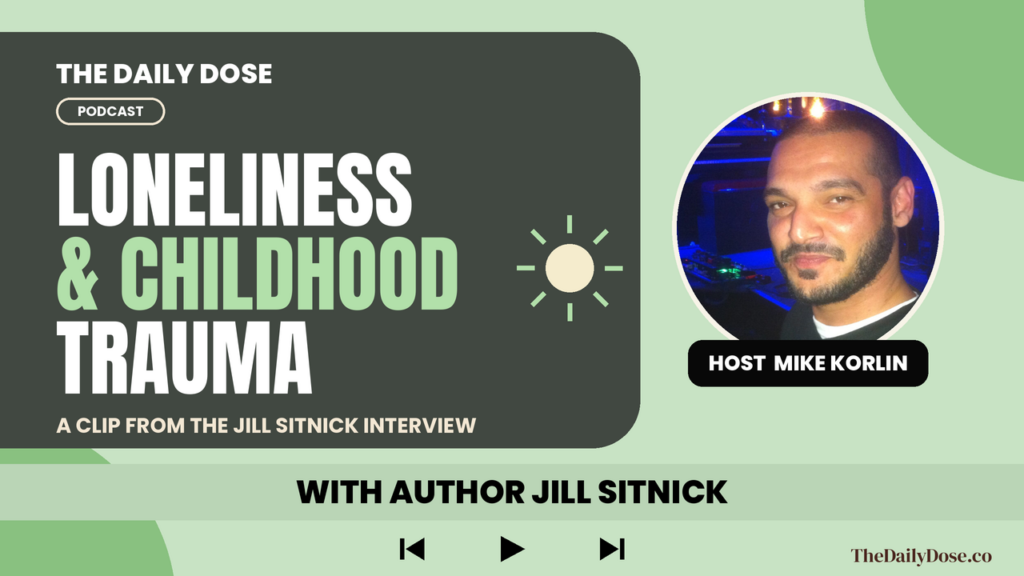
Checkout the audio clip here: The Daily Dose Podcast Audio
Across the country there are millions of people suffering at this very second, but it is not what you might think. They are not suffering from an injury. It is depression and loneliness. In this short episode of The Daily Dose Podcast I share a clip from my interview with author Jill Sitnick about her childhood trauma and her experience with MDMA therapy, alongside a recent article on loneliness and trauma.
This is a sensitive topic. Everything here is educational, based on one person’s story and a published article. It is not medical advice, and it does not recommend any treatment.
Key Takeaways
- This is a clip from the longer Jill Sitnick interview, a part that may have gone unheard because the full interview ran past the one-hour mark.
- Jill talks about traumas from her childhood, and it connects with a recent Psychology Today article on loneliness and trauma.
- According to the article, loneliness has been on the rise after the pandemic, especially among ages 20 to 35, with higher numbers in older adults as well.
- The article also discusses links between current symptoms and past trauma, as early as childhood.
- Jill’s story is one of many brave stories from people willing to share their most vulnerable moments.
- If you are struggling, a qualified mental health professional can help you. This is not a replacement for care.
Table of Contents
- The Data on Mental Health
- The Take: Loneliness and Childhood Trauma
- The Jill Sitnick Clip
- Why Telling These Stories Matters
- FAQ
- Educational Disclaimer
The Data on Mental Health
I start this post with a reality check. A Psychology Today article talks in depth about symptoms that have been arising post-pandemic. Loneliness is just one of the reports on the rise for ages 20 to 35, with higher numbers among the elderly as well.
The Take: Loneliness and Childhood Trauma
What I found most interesting is that the article describes links between these symptoms and past trauma, even as early as childhood. The article also mentions that cases involving childhood trauma tend to present some of the biggest challenges for people dealing with mental breakdowns such as depression.
This is general information from an article and does not apply to every person. Everyone’s story is different.
The Jill Sitnick Clip
In this clip I want to share a part of the Rescuing Jill Sitnick interview from months ago. It is a section that may have gone unheard by some, since the interview ran past an hour. She discusses some of the traumas of her childhood, and it linked well with the recent article above. If you want the whole story, listen to the full conversation: MDMA Therapy for PTSD with Jill Sitnick.
For the sake of clarity, this episode tells one person’s experience. Research on MDMA-assisted therapy is ongoing, its legal status depends on where you live, and nothing here is advice on using any substance.
Why Telling These Stories Matters
Stories like Jill’s can help people feel less alone. Here are a few gentle ideas, offered as general wellness thoughts, not clinical advice:
- Reaching out to a friend, family member, or support group can make a difference when you feel isolated.
- A licensed therapist or counselor can help you explore past experiences safely and at your own pace.
- Rest, movement, and routines that bring you into contact with other people can support your well-being.
If you are in crisis or thinking about harming yourself, call or text 988 in the U.S. (the Suicide and Crisis Lifeline) or contact local emergency services.
FAQ
It is a short clip from the Jill Sitnick interview about childhood trauma, shared alongside a Psychology Today article about loneliness and trauma.
It discusses loneliness and depression-related symptoms that have been rising after the pandemic, especially among ages 20 to 35 and in older adults.
According to the article, there are links between current symptoms and past trauma, as far back as childhood. It notes that childhood trauma can make things more challenging for people dealing with depression.
Jill Sitnick is an author who shared her story of living with PTSD and exploring MDMA therapy in our full interview.
No. This is an educational story. Talk to a licensed professional about your own situation.
Educational Disclaimer
This article is for educational purposes only and summarizes a podcast clip and a published article. It is not medical or mental health advice and is not intended to diagnose, treat, cure, or prevent any condition. It does not promote or provide instructions for using any controlled substance. If you are struggling, please talk with a qualified mental health professional.
Related Articles:
- Rescuing Jill MDMA Therapy For PTSD Interview With Author Jill Sitnick
- Ayahuasca: The Process Of Healing With Michael Thornhill
- Psychedelic Bill Vetoed California News Now
- Psilocybin MDMA Bill Passed For Veterans
- Benefits Of Amanita Mushrooms Explored
Meet The Author